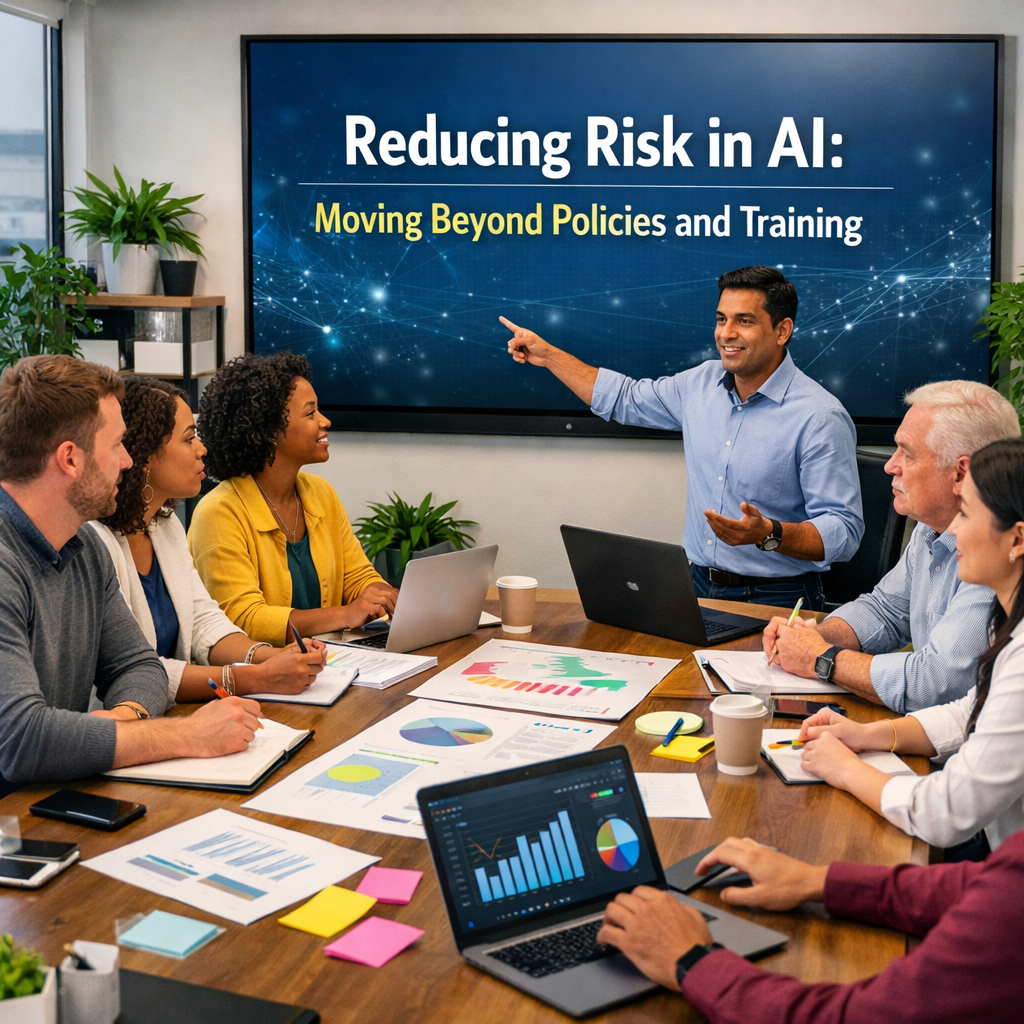


Reducing Risk in AI: Moving Beyond Policies and Training
Over the past year, most organizations have taken their first steps toward managing AI risk. Policies have been drafted. Training sessions have been...

2 min read
Annie Rosen
:
March 25, 2026
Most law firms don’t have a software problem.
They have a software sprawl problem.
Between Microsoft 365, iManage or NetDocuments, security tools, billing systems, AI platforms, and a growing list of niche solutions, firms are now managing dozens of licenses per user—often with very little visibility into actual usage.
And now AI is entering the mix, adding:
The result?
Firms are overspending, underutilizing, and duplicating capabilities at scale.
AI isn’t just another line item it’s the tool that can finally fix this.
In most firms, license management looks like this:
What we consistently see:
And with AI:
Costs go up. Value doesn’t.
AI introduces something most firms have never had:
real visibility into how tools are actually used
When deployed correctly, AI can:
No more guessing. No more annual “best effort” audits.
AI can map capabilities across systems and flag overlap:
Most firms are paying for the same function 2–3 times.
Not every attorney—or staff member—needs the same tools.
AI helps segment:
Result: smarter license allocation instead of blanket provisioning
Traditional license reviews happen:
AI enables:
License optimization becomes a system, not a project
Here’s where most firms get it wrong:
They adopt AI on top of an already inefficient stack.
Instead of:
“What should we remove, consolidate, or replace?”
The mindset becomes:
“What else should we add?”
This leads to:
🔥AI becomes expensive and underwhelming
The firms getting this right are taking a different approach:
License optimization isn’t just about cost savings.
It’s about:
Most firms can:
reduce software spend
improve performance
and accelerate AI adoption
All at the same time.
AI isn’t just another tool to buy.
It’s a forcing function.
The firms that treat it as:
The firms that use it to:
Over the past year, most organizations have taken their first steps toward managing AI risk. Policies have been drafted. Training sessions have been...
AI isn't coming for your support team — it's comingfor your competition. The organizations that treat artificial intelligence as a co-pilot, not a...
Earlier this week, markets reacted sharply to news that a frontier AI company had released new legal-focused automation capabilities. Shares of...